
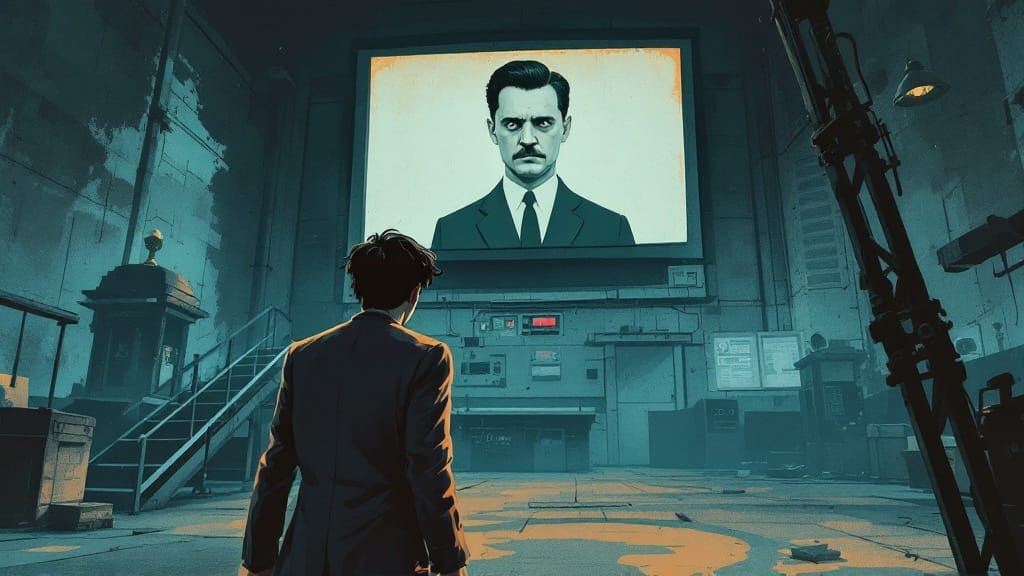
1984 Analysis Guide: Characters, Themes & Essay Tips for Top Grades
Key Takeaways: 1984 Analysis Essentials
- What are the main themes I need to understand? Totalitarian control through psychological manipulation, the destruction of truth and reality, individual identity versus collective control, and language as a tool of oppression—all demonstrated through Winston’s complete transformation from rebel to genuine Big Brother supporter.
- How do I analyze Winston Smith’s character effectively? Focus on Winston as Orwell’s “everyman” whose psychological journey from doubt to destruction illustrates how totalitarian systems target ordinary people, using his work at the Ministry of Truth to show the contradictions that make him both victim and unwitting participant in his own oppression.
- What literary techniques should I analyze in essays? Examine Orwell’s use of Newspeak and doublethink to show language control, symbolism like the glass paperweight representing fragile human connection, ironic ministry names that contradict their functions, and the three-part structure that mirrors totalitarian psychological control methods.
- How does historical context improve my analysis? Connect Orwell’s experiences during the Spanish Civil War and his observations of Stalin’s Soviet Union and Nazi Germany to show how the novel transforms real totalitarian techniques into literary insight, making your analysis more sophisticated than generic “government bad” interpretations.
- What makes a top-grade 1984 essay? Move beyond plot summary to analyze how Orwell’s techniques create meaning, integrate textual evidence with contextual understanding, demonstrate knowledge of Assessment Objectives (especially AO2 analysis of writer’s methods), and show how the novel’s insights about power, truth, and resistance remain relevant today.
George Orwell’s 1984 predicted surveillance states, fake news, and the manipulation of truth with terrifying accuracy. Yet high school essays often miss the sophisticated literary techniques that make these themes so powerful. This comprehensive 1984 analysis guide explores Winston Smith character development, key themes, and Orwell’s masterful use of language to help you write essays that demonstrate genuine literary insight rather than simple plot summary—exactly what modern exam boards like AQA, Edexcel, and OCR reward with top grades.
1984 Essential Facts: Characters, Themes & Study Overview
| Category | Details |
|---|---|
| Basic Information | Title: Nineteen Eighty-Four (1984) Author: George Orwell (Eric Blair) Publication: 8 June 1949, Secker & Warburg Genre: Dystopian fiction, political satire |
| One-Paragraph Synopsis | Winston Smith, a minor Party member in totalitarian Oceania, secretly rebels against Big Brother’s surveillance state by keeping a forbidden diary and beginning an illegal love affair with Julia. When they attempt to join an underground resistance movement, they discover their contact O’Brien is actually a Thought Police agent who subjects Winston to psychological torture until he betrays Julia and embraces his love for Big Brother. |
| Key Characters | Winston Smith | 39-year-old Outer Party member, Ministry of Truth worker who rewrites history Julia | 26-year-old rebellious Party member, Winston’s lover from Fiction Department O’Brien | Inner Party member who poses as Brotherhood ally but is actually Thought Police agent Big Brother | Omnipresent Party leader and figurehead, possibly fictional Emmanuel Goldstein | Alleged enemy of the state and Brotherhood leader Mr. Charrington | Shop owner who rents room to Winston and Julia, secretly Thought Police |
| Setting | Time: 1984 (though year uncertain) Place: Airstrip One (former Britain), province of superstate Oceania Atmosphere: Oppressive surveillance state with telescreens, constant propaganda, perpetual war |
| Key Themes at a Glance | • Totalitarian control and abuse of power • Manipulation of truth and reality • Individual vs. collective identity • Language as tool of oppression (Newspeak) • Love and human relationships under tyranny • Memory and historical consciousness • Technology and surveillance |
| Difficulty Level Indicator | ★★★★☆ (Moderate-Difficult) • Language complexity: Accessible prose but sophisticated concepts • Structure: Linear narrative with embedded political theory • Themes: Complex philosophical and political ideas requiring contextual knowledge • Cultural context: Demands understanding of 20th-century totalitarian movements • Analytical demands: Rich symbolism and layered meaning suitable for advanced analysis |
| Reading Time Estimate | 8-12 hours (328 pages), ideal for term-length study with multiple re-reading sessions for analysis |
Understanding Orwell’s World: 1984 Historical Context Analysis
George Orwell wrote 1984 during a pivotal moment in world history, and understanding this context transforms how we read every scene in the novel. Far from being abstract dystopian fiction, Orwell’s vision emerged from his direct confrontation with the totalitarian regimes that dominated the 1940s—particularly Stalin’s Soviet Union and Hitler’s Nazi Germany.
The Post-War Political Landscape
When Orwell completed 1984 in 1948, Europe stood at a crossroads that would define the next half-century. Though Hitler was defeated, Stalin’s communist regime was aggressively expanding across Eastern Europe, implementing the same surveillance techniques, propaganda methods, and psychological control mechanisms that Orwell had witnessed firsthand during the Spanish Civil War (Orwell, 1938). This immediate threat of communist expansion westward provided the urgent political backdrop that gives 1984 its devastating relevance.
Real-World Parallels in Orwell’s Vision:
| 1984 Element | Historical Inspiration | Analytical Significance |
|---|---|---|
| Big Brother’s cult of personality | Stalin’s god-like status in Soviet propaganda | Shows how totalitarian leaders use emotional manipulation rather than rational authority |
| Ministry of Truth rewriting history | Soviet practice of removing “unpersons” from photographs and records | Demonstrates how control of the past enables control of the present |
| Two Minutes Hate | Nazi and Soviet propaganda films designed to focus public hatred | Reveals how manufactured enemies unite populations under authoritarian control |
| Thoughtcrime and Thought Police | Soviet psychiatric imprisonment of political dissidents | Illustrates the ultimate goal of totalitarian control: the human mind itself |
Orwell’s Personal Journey to 1984
Orwell’s political awakening began during his service with the colonial police in Burma, where he witnessed imperial oppression firsthand. However, his defining experience came during the Spanish Civil War, where he fought with the POUM (Partido Obrero de Unificación Marxista) against Franco’s fascists. There, Orwell observed something that would haunt him for the rest of his life: Stalin’s communists systematically betraying and murdering their own anti-fascist allies, demonstrating that totalitarianism could emerge from the left as easily as from the right (Orwell, 1938).
In his 1946 essay “Why I Write,” Orwell stated that “every line of serious work that I have written since 1936 has been written, directly or indirectly, against totalitarianism and for democratic socialism” (Orwell, 1946). This personal mission explains why 1984 feels so urgent and authentic—Orwell wasn’t imagining abstract horrors, but extrapolating from systems he had seen destroy real human lives.
Why Context Matters for Modern Students
Understanding Orwell’s historical moment helps students avoid the trap of reading 1984 as generic “government is bad” commentary. Instead, they can appreciate how Orwell constructed a precise diagnosis of totalitarian techniques that remain relevant today. When students analyze Winston Smith’s character development or examine the function of Newspeak, they’re not just studying literary devices—they’re exploring Orwell’s analysis of how democratic societies can slide toward authoritarianism through seemingly reasonable steps.
Plot Analysis: 1984 Summary with Advanced Structural Understanding
Orwell’s plot structure in 1984 follows a carefully orchestrated three-part psychological journey that mirrors the classic pattern of totalitarian control: seduction, corruption, and destruction of the individual spirit. Understanding this structure helps students move beyond simple plot summary to analyze how Orwell uses narrative progression to reinforce his themes.
Part I: The Architecture of Oppression
The opening section establishes both the physical and psychological landscape of Oceania while introducing Winston Smith as our guide through this nightmare. Orwell’s famous opening—”It was a bright cold day in April, and the clocks were striking thirteen”—immediately signals that we’ve entered a world where even time itself has been appropriated by the state.
Key Scenes for Analysis:
Winston’s Diary Writing: This scene establishes the novel’s central conflict between individual consciousness and state control. When Winston writes “DOWN WITH BIG BROTHER,” he commits both a literal crime (thoughtcrime) and a symbolic act of human dignity. Students should note how Orwell presents this as simultaneously brave and pathetic—Winston knows he’s doomed but writes anyway, demonstrating the irrepressible human need for self-expression.
The Two Minutes Hate: Orwell’s description of this daily ritual reveals how totalitarian regimes manufacture consent through collective emotional manipulation. The scene demonstrates “doublethink” in action—citizens simultaneously love Big Brother and hate Emmanuel Goldstein, without questioning the contradiction. The fact that Winston joins in while inwardly rebelling shows how external conformity can coexist with internal resistance.
Part II: The Illusion of Rebellion
The middle section introduces Julia and the false hope of meaningful resistance. This structural choice is crucial—Orwell doesn’t allow Winston to remain in isolated despair but shows him the possibility of love and companionship, making his eventual destruction more devastating.
Critical Analysis Framework for Winston and Julia’s Relationship:
- Physical Space and Freedom: Their meetings in the countryside and the rented room above Charrington’s shop represent attempts to escape surveillance, but Orwell ensures we understand these spaces as illusions of freedom rather than genuine escapes.
- Different Types of Rebellion: Julia’s rebellion is personal and present-focused (she wants pleasure and small freedoms), while Winston’s is intellectual and future-oriented (he wants to understand and change the system). This difference foreshadows their different fates under torture.
- The Golden Country: Winston’s dream of this pastoral landscape where he first meets Julia symbolizes humanity’s longing for natural, unmediated experience—exactly what the Party seeks to destroy.
Part III: The Destruction of Hope
The final section, set largely in the Ministry of Love, represents Orwell’s most sophisticated analysis of how totalitarian systems don’t just silence opposition but transform it into support. This isn’t simple brainwashing—it’s a systematic dismantling of the individual personality.
Room 101 as Literary and Political Symbol: Students often focus on the horror of Winston’s worst fear (rats), but the deeper analytical point is how O’Brien uses this fear to force Winston to betray Julia. The Party doesn’t want Winston’s death—it wants his soul, demonstrating that totalitarian power seeks not just obedience but genuine love from its victims.
Structural Significance for Student Analysis
This three-part structure mirrors the classic totalitarian process that Orwell observed in real regimes: first, establish total control over information and behavior; second, allow limited illusions of freedom to identify dissidents; third, convert resistance into active support through psychological manipulation. Students who understand this pattern can analyze how Orwell uses literary techniques to reinforce political insights throughout the novel.
Winston Smith Character Analysis: Psychology of Resistance and Defeat
Winston Smith represents one of literature’s most complex protagonists—neither traditional hero nor antihero, but rather an ordinary person caught between his human need for dignity and truth and the overwhelming power of a totalitarian state. Orwell deliberately chose to make Winston unremarkable physically and intellectually, creating what he called “a central eye… [the reader] can readily identify with” (Orwell, 1949).
Winston’s Character Arc: From Doubt to Destruction
Stage 1: Internal Rebellion (Part I) Winston begins the novel as what we might call a “thoughtcriminal”—someone whose job at the Ministry of Truth, rewriting historical records, has given him dangerous knowledge about how the Party manipulates reality. His character is defined by contradictions that Orwell uses to explore the psychology of resistance under totalitarianism.
Character Analysis Framework:
| Aspect | Evidence | Significance for Essays |
|---|---|---|
| Physical Description | 39 years old, varicose ulcer, five false teeth | Orwell emphasizes Winston’s ordinariness and physical decay, showing how the Party ages its citizens prematurely |
| Intellectual Capacity | Questions Party doctrine but lacks systematic understanding | Demonstrates how totalitarian education creates doubt without providing tools for effective resistance |
| Emotional State | Rage alternating with despair, haunted by childhood memories | Shows how the Party’s psychological control creates internal fragmentation |
| Moral Character | Considers murdering his wife, yet yearns for human connection | Illustrates how oppressive systems corrupt even their victims’ moral sensibilities |
Stage 2: The Illusion of Freedom (Part II) Winston’s relationship with Julia temporarily restores his psychological and physical health, but Orwell carefully shows this as a temporary reprieve rather than genuine liberation. The change in Winston’s character during this period serves multiple analytical purposes:
- Physical regeneration: His ulcer heals and his energy returns, demonstrating the connection between psychological oppression and physical degradation
- Intellectual awakening: He begins to understand the Party’s techniques more clearly, particularly after reading Goldstein’s book
- Emotional development: For the first time, he experiences mature love, which Orwell presents as fundamentally threatening to totalitarian control
Stage 3: Complete Transformation (Part III) Winston’s destruction in the Ministry of Love represents Orwell’s most sophisticated analysis of how modern totalitarian systems work. Unlike historical tyrannies that simply killed opponents, the Party seeks to convert them into genuine believers.
Advanced Character Analysis: Winston as Political Symbol
The Everyman as Political Victim: Orwell deliberately made Winston neither particularly brave nor particularly intelligent, showing how totalitarian systems target ordinary people rather than just heroic resisters. This choice forces readers to ask uncomfortable questions about their own potential responses to authoritarianism.
Memory as Resistance: Throughout the novel, Winston’s memories of his mother and sister represent his connection to pre-Party values of love and sacrifice. The Party’s ultimate victory comes when it severs this connection, replacing personal memory with Party orthodoxy.
The Question of Winston’s “Reality”: Some critics argue that Winston’s experiences might be entirely constructed by the Party—that O’Brien has been manipulating him from the beginning. Whether or not students accept this interpretation, discussing it demonstrates sophisticated engagement with the text’s exploration of reality and perception.
Key Quotes for Character Analysis Essays
“If you loved someone, you loved him, and when you had nothing else to give, you still gave him love.”
This reflection on his mother’s sacrifice reveals Winston’s understanding of authentic human values that the Party seeks to destroy.
“Under the spreading chestnut tree / I sold you and you sold me”
Winston’s final acceptance of this nursery rhyme shows his complete psychological defeat—he now celebrates the betrayal that once horrified him.
Essay Technique: When analyzing Winston’s character, students should avoid simple judgments about whether he’s “strong” or “weak.” Instead, focus on how Orwell uses Winston’s psychological journey to explore broader questions about human nature under extreme political pressure.
The Architecture of Oppression: Orwell’s Literary Techniques in 1984
Orwell’s mastery of literary technique serves his political purpose—every stylistic choice reinforces the novel’s exploration of how totalitarian systems operate. Understanding these techniques helps students move beyond plot analysis to examine how Orwell creates meaning through language, structure, and symbolism.
Language as Control: Newspeak and Doublethink Analysis
Newspeak represents Orwell’s most sophisticated insight into how authoritarian regimes operate: by controlling language, they can literally control thought. This isn’t metaphorical—Orwell argues that if people lack words for certain concepts, they become unable to think those thoughts.
Newspeak Principles and Their Effects:
- Vocabulary Reduction: Eliminate words that express prohibited concepts
- Euphemism Creation: Replace harsh realities with pleasant-sounding alternatives
- Logical Contradiction: Build contradictions directly into language structure
Examples for Analysis:
- “Minipax” (Ministry of Peace conducts war)
- “Miniluv” (Ministry of Love tortures citizens)
- “Ungood” replaces “bad” (eliminating gradations of negative judgment)
Doublethink as Literary Technique: Orwell doesn’t just describe doublethink—he demonstrates it through his narrative structure. Readers must simultaneously accept the novel’s realistic psychological portrayals while engaging with its fantastical political premise, creating their own form of doublethink that helps them understand the concept viscerally.
Narrative Perspective and Psychological Realism
Orwell employs third-person limited narration focused through Winston’s consciousness, a technique that serves multiple analytical purposes:
Free Indirect Discourse: Orwell frequently blends Winston’s thoughts with narrative description, creating ambiguity about what’s “real” versus what’s Winston’s interpretation. This technique mirrors the novel’s thematic concern with the malleability of reality under totalitarian control.
Example for Analysis:
“Winston was dreaming of his mother. He must, he thought, have been ten or eleven years old when his mother had disappeared.”
Notice how Orwell moves seamlessly between Winston’s dream state, his conscious reflection, and narrative fact, creating uncertainty about the reliability of memory itself.
Symbolism and Motif Analysis
The Glass Paperweight: This object functions as a complex symbol that evolves throughout the novel:
- Initially represents Winston’s connection to the past and to authentic beauty
- Becomes a symbol of his relationship with Julia (something fragile and beautiful hidden from the Party)
- Its destruction during Winston’s arrest symbolizes the destruction of all private experience under totalitarianism
The Golden Country: Winston’s recurring dream of this pastoral landscape represents:
- Pre-industrial innocence that the Party has destroyed
- Natural human sexuality free from political control
- The possibility of unmediated experience between human beings
Analysis Framework for Students: When examining Orwell’s symbols, consider both their evolution throughout the narrative and their connection to the novel’s broader political themes. Effective literary analysis shows how symbolic meaning emerges from context rather than being arbitrarily imposed.
Irony and Contradiction as Structural Principles
Orwell builds irony into every level of the novel’s construction:
Structural Irony: The three-part structure appears to follow a traditional pattern of conflict, development, and resolution, but instead leads to complete defeat for the protagonist.
Linguistic Irony: Ministry names contradict their functions, Party slogans contradict reality, and the Party’s ultimate slogan “2 + 2 = 5” represents the triumph of political power over mathematical truth.
Character Irony: Winston works for the very system he despises, O’Brien appears to be a rebel but is actually a loyal Party member, and Julia seems free-spirited but proves more thoroughly defeated than Winston.
Major Themes Analysis: 1984 Key Themes Decoded
Understanding the major themes in 1984 requires moving beyond simple identification to analyzing how these themes develop through character action, plot progression, and symbolic structure. Orwell doesn’t just present themes—he demonstrates how they operate in human psychology and political systems.
Totalitarian Power and Its Mechanisms
Orwell’s analysis of totalitarian power goes far beyond simple dictatorship. The Party in 1984 represents what Hannah Arendt called “total domination”—control that extends into every aspect of human existence, including consciousness itself (Arendt, 1951).
The Nature of Party Power:
Unlike traditional tyrannies that seek obedience, the Party seeks love. O’Brien’s explanation to Winston reveals the sophisticated psychological understanding that underlies modern totalitarianism:
“The object of power is power. Now you begin to understand me.”
This isn’t sadism for its own sake—it’s a systematic analysis of how political control can become self-perpetuating when it successfully transforms human nature itself.
Power Analysis Framework:
| Level of Control | Technique Used | Textual Evidence | Thematic Significance |
|---|---|---|---|
| Physical | Surveillance, torture | Telescreens, Room 101 | Creates external compliance through fear |
| Intellectual | Information control | Ministry of Truth, Newspeak | Eliminates factual basis for resistance |
| Emotional | Psychological manipulation | Two Minutes Hate, love for Big Brother | Channels human emotions toward Party purposes |
| Spiritual | Destruction of human bonds | Anti-Sex League, betrayal requirement | Eliminates competing loyalties to family, lovers, friends |
Truth and Reality Under Political Control
Orwell’s exploration of truth represents one of the novel’s most philosophically sophisticated themes. The Party doesn’t just lie—it creates a system where the concept of objective truth becomes meaningless.
The Party’s Reality Control Techniques:
- Historical Revisionism: Constantly rewriting the past to match present needs
- Doublethink: Training citizens to accept contradictory beliefs simultaneously
- Reality Denial: Insisting that objective facts don’t exist independently of Party doctrine
O’Brien’s Philosophy of Truth:
“Reality exists in the human mind, and nowhere else. Not in the individual mind, which can make mistakes, and in any case soon perishes: only in the mind of the Party, which is collective and immortal.”
This represents Orwell’s analysis of how totalitarian systems attempt to solve the problem of political opposition by eliminating the intellectual tools necessary for resistance.
Student Analysis Approach: When writing about this theme, focus on specific scenes where characters struggle with conflicting versions of reality. The chocolate ration scene, Winston’s memories of the photograph proving the innocence of the three executed Party members, and his final acceptance that 2 + 2 = 5 all demonstrate different aspects of how the Party manipulates truth.
Individual Identity Versus Collective Control
The destruction of individual identity represents the novel’s emotional and philosophical core. Orwell shows how totalitarian systems must eliminate private experience because even the smallest autonomous thought threatens absolute control.
The Components of Individual Identity in 1984:
Memory: Winston’s recollections of his mother and sister represent his connection to pre-Party values of love and sacrifice. The Party’s ultimate victory requires erasing these memories and replacing them with Party-approved emotional responses.
Love: The relationship between Winston and Julia threatens the Party because it creates a loyalty stronger than political allegiance. Notice how their betrayal of each other completes their destruction as individuals—they become incapable of authentic human connection.
Privacy: The concept of a life invisible to the state represents the foundation of individual dignity. Room 101 succeeds not just because it breaks Winston’s resistance, but because it eliminates his last private experience (his love for Julia).
Language and Thought Control
Orwell’s analysis of how language shapes thought has influenced decades of political and philosophical discussion. The creation of Newspeak represents his most concrete exploration of how authoritarian systems can literally change human consciousness.
The Linguistic Basis of Thought Control:
Orwell argues that political freedom requires linguistic freedom—people need words to express forbidden thoughts. By systematically eliminating vocabulary that could express dissent, the Party makes resistance literally unthinkable.
Advanced Analysis Point: Students should note that Orwell presents Newspeak as still evolving during the novel’s events. The appendix (written as if from a post-Party future) describes Newspeak in the past tense, suggesting that the totalitarian system eventually failed. This subtle detail offers hope that language itself may be more resilient than political systems.
Quote for Analysis:
“How could you communicate with the future? It was of its nature impossible. Either the future would resemble the present, in which case it would not listen to him, or it would be different from it, and his predicament would be meaningless.”
This passage shows Winston grappling with the fundamental problem of resistance under total control—how can one communicate with future generations when the system controls all forms of communication?
Critical Scenes for Essay Analysis: 1984 Key Passages Decoded
Certain scenes in 1984 function as concentrated examples of Orwell’s major themes and techniques. Mastering the analysis of these key passages provides students with the textual evidence needed for sophisticated essay responses that move beyond plot summary to genuine literary criticism.
Room 101: The Psychology of Ultimate Betrayal
The Room 101 sequence represents the climax of Orwell’s psychological analysis. This scene deserves careful attention because it demonstrates how totalitarian systems achieve their ultimate goal: not just obedience, but the complete transformation of human nature.
Scene Setup and Context: Winston has endured months of torture, but O’Brien explains that breaking his resistance isn’t enough—the Party requires Winston to betray Julia willingly, destroying his capacity for authentic love.
Key Analytical Elements:
The Rats as Symbol: Winston’s terror of rats connects to his childhood trauma and represents his deepest vulnerability. O’Brien doesn’t choose this fear arbitrarily—he understands that effective torture must target the specific psychological foundations of individual identity.
The Moment of Betrayal:
“Do it to Julia! Do it to Julia! Not me! Julia! I don’t care what you do to her. Tear her face off, strip her to the bones. Not me! Julia! Not me!”
Advanced Analysis Points:
- The repetition and desperate rhythm reveal complete psychological collapse
- Winston doesn’t just accept Julia’s torture—he actively demands it, showing how the Party transforms love into hatred
- The phrase “I don’t care what you do to her” represents the death of empathy, making Winston incapable of authentic human connection
Essay Application: Students analyzing this scene should focus on how Orwell uses specific psychological details to illustrate broader political points about totalitarian control. The horror isn’t just in Winston’s suffering, but in his transformation into the kind of person who would demand his lover’s torture.
The Golden Country: Paradise Lost and Found
Winston and Julia’s first meeting in the countryside provides crucial contrast to the urban surveillance state, representing Orwell’s vision of natural human experience before political contamination.
Scene Analysis Framework:
Natural vs. Artificial Environment:
- Golden sunlight vs. harsh telescreen light
- Birdsong vs. propaganda broadcasts
- Physical freedom vs. constant surveillance
- Spontaneous sexuality vs. Anti-Sex League doctrine
Symbolic Significance: The scene fulfills Winston’s recurring dream, suggesting that the human longing for natural experience persists even under total political control. However, Orwell ensures we understand this freedom as temporary and illusory—the Party has allowed this meeting to happen as part of their larger plan.
Key Quote for Analysis:
“The birds sang, the proles sang, the Party did not sing.”
This observation reveals Winston’s growing understanding that authentic expression exists only outside Party control—among animals and the supposedly “inferior” proles.
The Chestnut Tree Café: Victory Over the Self
The novel’s final scene deserves recognition as one of literature’s most devastating endings. Winston’s complete transformation demonstrates Orwell’s argument that modern totalitarian systems don’t just defeat opposition—they convert it into support.
Character Transformation Analysis:
- Winston now genuinely loves Big Brother (not just fears him)
- He celebrates his own betrayal through the nursery rhyme
- He looks forward to his execution as a final act of devotion
- His last thought represents complete identification with Party interests
The Significance of Genuine Conversion: Unlike historical torture victims who might confess falsely while retaining inner resistance, Winston has been genuinely transformed. Orwell’s psychological insight is that effective totalitarian control must change consciousness itself, not just behavior.
Quote Bank for Student Essays:
On Winston’s Final State:
“He had won the victory over himself. He loved Big Brother.”
On the Nature of His Transformation:
“But it was all right, everything was all right, the struggle was finished.”
Essay Strategy: When analyzing the ending, students should avoid simple moral judgments about Winston’s “weakness.” Instead, focus on how Orwell uses Winston’s complete defeat to illustrate the sophisticated psychological techniques that modern totalitarian systems can employ.
The Two Minutes Hate: Collective Psychology in Action
This recurring scene demonstrates how totalitarian systems manipulate group psychology to maintain control. Orwell’s detailed description reveals his understanding of how individual resistance can be overwhelmed by collective emotion.
Psychological Progression Analysis:
- Initial Resistance: Winston begins with skeptical distance from the ritual
- Involuntary Participation: His hatred emerges despite conscious resistance
- Emotional Release: He experiences genuine relief through directed hatred
- Renewed Loyalty: The session ends with spontaneous love for Big Brother
The Function of Emmanuel Goldstein: Goldstein serves as the perfect enemy because he:
- Provides a focus for negative emotions that might otherwise target the Party
- Represents intellectual opposition (making him hateable to Party members)
- May not actually exist (showing how the Party creates reality to serve its needs)
Advanced Analytical Point: Notice how Orwell presents the Two Minutes Hate as both horrifying and psychologically satisfying. This dual response helps readers understand how ordinary people can participate in totalitarian systems—the rituals meet real emotional needs even as they serve oppressive purposes.
These critical scenes provide students with concrete textual evidence for analyzing Orwell’s major themes while demonstrating sophisticated literary techniques in action. Effective essay responses should use these passages not just as evidence, but as starting points for exploring the novel’s broader insights into politics, psychology, and human nature.
Advanced Analysis: Different Critical Perspectives
Marxist Critical Readings of 1984
George Orwell’s 1984 provides rich material for Marxist analysis, though the application of Marxist criticism to the novel requires careful consideration of Orwell’s complex relationship with socialist ideology. As a democratic socialist who opposed Stalinism, Orwell created a work that both critiques capitalism and warns against authoritarian socialism—a duality that makes Marxist readings particularly sophisticated.
Class Structure in Oceania
Orwell’s presentation of Oceania’s three-tier class system mirrors classical Marxist analysis of social stratification, yet subverts traditional revolutionary expectations. The Inner Party (2% of the population) functions as the ruling class, owning the means of production and exercising complete ideological control. The Outer Party (13%) represents a middle class caught between privilege and oppression—they participate in the system’s maintenance while remaining subject to its control. The proles (85%) constitute the working class, yet Orwell presents them as the only group capable of authentic existence precisely because they remain largely outside direct Party control.
This structure reveals Orwell’s sophisticated understanding of how totalitarian systems co-opt traditional class relationships. Unlike Marx’s prediction that the proletariat would develop revolutionary consciousness through their oppression, Orwell suggests that excessive surveillance and control can prevent such consciousness from emerging. Winston’s famous observation that “if there is hope, it lies in the proles” represents both Marxist faith in working-class potential and pessimism about its realization under total ideological control.
Commodification and Alienation
The novel demonstrates Marx’s concept of alienation operating at multiple levels (Marx, 1867). Winston’s work at the Ministry of Truth exemplifies alienated labor—he produces nothing of value while destroying authentic historical records. His labor serves only to reinforce the system that oppresses him, creating what Marx called “false consciousness” on an industrial scale.
The Party’s control extends Marx’s analysis of commodity fetishism into the realm of human relationships themselves. Love, sexuality, and family bonds become commodified—regulated by the state for productive purposes rather than human fulfillment. Julia’s membership in the Anti-Sex League represents the ultimate commodification of sexuality, where even the repression of sexual desire serves state economic interests by channeling energy toward production and political loyalty.
Orwell’s Critique of Marxist Orthodoxy
Significantly, Orwell uses Marxist analytical tools to critique the corruption of Marxist revolutionary ideals. The Party’s use of doublethink to maintain power—holding contradictory beliefs simultaneously—represents Orwell’s analysis of how revolutionary movements can betray their founding principles while maintaining their rhetorical commitments. When O’Brien explains that “the object of power is power,” he articulates a post-Marxist understanding of how political movements can become ends in themselves rather than means to human liberation.
This critique becomes particularly relevant when students consider how Goldstein’s book, “The Theory and Practice of Oligarchical Collectivism,” functions as a parody of Marxist theoretical writing. The book’s analysis of perpetual warfare serving economic interests mirrors legitimate Marxist critiques of imperialism, yet its existence as a Party creation suggests how revolutionary theory can be co-opted and weaponized by the very systems it claims to oppose.
Feminist Literary Analysis of 1984
Feminist criticism of 1984 has generated significant scholarly debate, with critics divided between those who see the novel as reflecting the misogynistic attitudes of Orwell’s era and those who argue for more complex interpretations of gender dynamics within totalitarian systems. Understanding these different feminist perspectives provides students with sophisticated analytical tools for examining how gender operates in Orwell’s dystopia.
Traditional Feminist Critiques
Early feminist criticism of 1984 focused on what critics like Daphne Patai identified as the novel’s fundamental masculinist perspective (Patai, 1984). This analysis points to several problematic elements in Orwell’s presentation of female characters:
Limited Character Development: Critics argue that female characters exist primarily to serve male characters’ narrative and psychological needs rather than functioning as fully realized individuals. Julia, the novel’s most prominent female character, is defined almost entirely through her relationship with Winston, lacking independent motivation or character development beyond her role as love interest and sexual partner.
The Madonna-Whore Dichotomy: Feminist critics note how Orwell presents women through a restrictive binary that reflects patriarchal thinking. Julia embodies the sexually liberated “whore” figure—rebellious, sensual, and ultimately untrustworthy—while Winston’s mother represents the sacrificial “madonna” figure who embodies traditional feminine virtues of selflessness and nurturing. Katherine, Winston’s estranged wife, represents a third archetype—the frigid, dutiful woman whose sexuality has been completely co-opted by state interests.
Sexual Politics and Male Fantasy: The novel’s treatment of sexuality has drawn particular feminist scrutiny. Winston’s initial desire to rape and murder Julia, followed by their romantic relationship, suggests a disturbing connection between male sexual desire and violence that the text never adequately critiques. Julia’s easy acceptance of Winston’s confession about his violent fantasies—and her own claim to have had affairs with numerous Party members—has been interpreted as reflecting male fantasy rather than authentic female psychology.
Contemporary Feminist Reinterpretations
More recent feminist scholarship has developed nuanced readings that acknowledge these problematic elements while exploring alternative interpretations that reveal the novel’s potential insights into gender dynamics under totalitarian control.
Gender and Totalitarian Control: Scholars like Catherine Gallagher argue that Orwell’s presentation of gender relations illuminates how totalitarian systems specifically target and manipulate sexual and familial relationships (Gallagher, 1990). The Party’s regulation of sexuality through institutions like the Anti-Sex League and the attempt to eliminate private emotional bonds represents a sophisticated analysis of how political control extends into the most intimate aspects of human experience.
From this perspective, Julia’s apparent superficiality and political disengagement might be read not as authorial misogyny but as a survival strategy developed by women within oppressive systems. Her ability to navigate Party requirements while maintaining private pleasure and resistance demonstrates a form of practical intelligence that Winston lacks.
Women as Repositories of Authentic Experience: Despite their limited narrative development, female characters in 1984 consistently represent connections to authentic human experience that transcends political manipulation. Winston’s memories of his mother’s self-sacrifice, his observation of the singing prole woman, and his relationship with Julia all provide moments of genuine human connection that resist the Party’s dehumanizing influence.
The prole woman whom Winston observes hanging laundry and singing becomes, in this reading, a symbol of enduring humanity. Her unselfconscious joy in simple domestic activities and her physical connection to life-giving activities (bearing children, maintaining households) represent forms of resistance that exist outside the Party’s conceptual framework.
Historical Context and Cold War Interpretations
Understanding 1984 within the context of the emerging Cold War provides crucial insight into how the novel functioned as both warning and prophecy for its original audience. Orwell wrote the novel during the critical period when wartime alliance between the West and Soviet Union was dissolving into ideological opposition.
The Iron Curtain Context
Winston Churchill’s famous “Iron Curtain” speech in March 1946 occurred while Orwell was beginning work on 1984 (Churchill, 1946). The speech’s description of Soviet control over Eastern Europe provides direct historical context for understanding Oceania’s geopolitical structure. Orwell’s division of the world into three superstates—Oceania, Eurasia, and Eastasia—reflects contemporary fears about global division into competing ideological blocs.
The novel’s presentation of perpetual warfare between these superstates anticipates the Cold War’s structure of permanent tension without direct confrontation. Orwell’s insight that “the war is waged by each ruling group against its own subjects” proved remarkably prescient about how Cold War tensions would be used to justify domestic surveillance and political repression in both democratic and authoritarian societies.
Atomic Age Anxieties
The novel’s composition coincided with growing awareness of nuclear weapons’ implications for human civilization. The atomic bombings of Hiroshima and Nagasaki in 1945 had demonstrated technology’s potential for mass destruction, while early Cold War tensions raised the specter of nuclear conflict. Orwell’s presentation of a world devastated by atomic warfare reflects these immediate anxieties while exploring how such catastrophic events might be used to justify totalitarian control.
The Party’s manipulation of war news—constantly shifting alliances between Oceania, Eurasia, and Eastasia—reflects Orwell’s understanding that modern warfare’s complexity makes it difficult for ordinary citizens to verify official claims about military necessity. This insight proved particularly relevant during the Cold War, when governments on both sides used the threat of external enemies to justify domestic restrictions on civil liberties.
Modern Relevance: Digital Surveillance and Social Media
Contemporary critical approaches to 1984 frequently focus on its relevance to digital age concerns about privacy, surveillance, and information control. These readings demonstrate the novel’s continued analytical power while revealing how technological change has created new forms of the control mechanisms Orwell anticipated.
Surveillance Capitalism and Data Collection
Shoshana Zuboff’s concept of “surveillance capitalism” provides a framework for understanding how 1984‘s insights apply to contemporary technology companies’ data collection practices (Zuboff, 2019). Unlike Orwell’s centralized state surveillance, modern data collection operates through voluntary participation in digital platforms that extract personal information in exchange for services.
This comparison reveals both continuities and differences between Orwell’s vision and contemporary reality. While modern surveillance often lacks the coercive apparatus of the Thought Police, it achieves similar results through what Zuboff calls “behavioral modification”—using collected data to influence individual choices and political opinions. The effectiveness of social media platforms in shaping political discourse and election outcomes demonstrates how surveillance can be used for control even without direct government involvement.
Information Warfare and “Post-Truth” Politics
The emergence of “post-truth” politics and “alternative facts” in contemporary political discourse has sparked renewed interest in Orwell’s analysis of truth manipulation (McIntyre, 2018). The Party’s practice of constantly revising historical records to match current political needs finds parallels in contemporary attempts to undermine factual reporting and scientific consensus.
However, modern information warfare operates through fragmentation rather than centralization—instead of a single Ministry of Truth controlling all information, contemporary audiences encounter multiple competing versions of reality through different media ecosystems. This difference suggests that while Orwell’s insights about truth manipulation remain relevant, the mechanisms have evolved in ways that create new challenges for democratic discourse.
Social Media Echo Chambers and Reality Control
Contemporary social media platforms create what some scholars call “epistemic bubbles”—information environments where users encounter only information that confirms their existing beliefs (Nguyen, 2020). While this differs from 1984‘s centralized information control, it achieves similar effects by making it difficult for individuals to access information that might challenge their worldview.
The algorithmic curation of social media content represents a form of reality control that operates through personalization rather than uniformity. Each user experiences a different version of reality based on their digital footprint, creating millions of individualized information environments rather than the single shared reality that the Party imposes in 1984. This fragmentation may be even more effective than Orwell’s centralized control because it makes organized resistance more difficult when people cannot agree on basic facts.
Exam Success: Essays That Score Top Marks
Understanding Assessment Objectives and Mark Schemes
Achieving top grades in 1984 essays requires understanding exactly what examiners look for at each level. Assessment Objectives provide a clear framework for developing responses that demonstrate the sophisticated analysis examiners reward with the highest marks.
Assessment Objective Breakdown for 1984 Essays
Understanding how Assessment Objectives apply specifically to 1984 analysis helps students target their efforts toward demonstrating the skills examiners value most highly:
AO1: Textual Knowledge and Understanding
- Basic Level: Retelling plot events or identifying themes without development
- Good Level: Accurate reference to specific scenes and characters with clear understanding
- Excellent Level: Sophisticated selection of textual details that illuminate broader patterns and meanings
For 1984: Rather than simply stating that “Winston works at the Ministry of Truth,” an excellent response might observe: “Winston’s role rewriting historical documents at the Ministry of Truth places him at the intersection of the novel’s major themes—he experiences daily the Party’s manipulation of truth while remaining psychologically dependent on the very system he knows to be false.”
AO2: Analysis of Language, Form and Structure
- Basic Level: Identifying techniques without explaining their effects
- Good Level: Explaining how specific techniques create meaning
- Excellent Level: Analyzing how techniques work together to create complex effects
For 1984: Instead of noting that “Orwell uses symbolism,” top responses analyze how specific symbols function: “The glass paperweight’s fragility mirrors the delicate nature of Winston and Julia’s relationship, while its destruction during their arrest symbolizes the impossibility of preserving private experience under totalitarian surveillance—the Party literally shatters their attempt to create a space beyond its control.”
AO3: Context and Interpretation
- Basic Level: Mentioning historical context without connecting to the text
- Good Level: Showing how context illuminates specific aspects of the text
- Excellent Level: Integrating contextual understanding to develop sophisticated interpretations
For 1984: Rather than generally stating that “Orwell was influenced by Stalin,” sophisticated responses might argue: “Orwell’s experience of Stalin’s purges of fellow leftists during the Spanish Civil War explains the novel’s focus on how totalitarian systems destroy ideological allies—O’Brien’s betrayal of Winston reflects Orwell’s understanding that authoritarian movements inevitably consume their own supporters.”
Sample Essay Questions with Analytical Approaches
Mastering different question types requires understanding the specific analytical approaches each demands. The following examples demonstrate how to decode question requirements and develop focused responses:
Character Analysis Question: “Explore the ways in which Orwell presents Winston Smith as both victim and rebel in 1984.”
Question Analysis: This requires examining the paradox of Winston’s position—simultaneously oppressed by the system and resistant to it. The key word “both” signals that you must analyze the coexistence of these qualities rather than treating them separately.
Approach Framework:
- Establish the paradox: Winston’s position as both inside and outside the system
- Analyze victimization: How the Party’s methods affect Winston psychologically and physically
- Examine rebellion: The forms Winston’s resistance takes and their limitations
- Explore the tension: How these roles interact and conflict throughout the novel
- Evaluate the resolution: How the paradox resolves (or fails to resolve) in Winston’s defeat
Model Opening: “Winston Smith embodies the tragic contradictions of resistance under totalitarian control—his position within the Party apparatus makes both his victimization and his rebellion possible, yet ultimately ensures the failure of both. Orwell uses Winston’s dual role to explore how totalitarian systems create the very opposition they subsequently destroy, transforming rebellion into a mechanism of control.”
Theme Analysis Question: “How does Orwell explore the relationship between memory and truth in 1984?”
Question Analysis: This requires examining not just individual themes but their interaction. The focus on “relationship” demands analysis of how memory and truth depend on, conflict with, and shape each other.
Approach Framework:
- Define the relationship: How memory and truth function differently in Oceania
- Analyze Party control: Methods used to manipulate both memory and truth
- Examine Winston’s experience: His struggle to maintain accurate memory against official truth
- Explore broader implications: What this relationship reveals about human consciousness and resistance
- Evaluate Orwell’s message: What the novel suggests about the possibility of objective truth
Model Opening: “In Orwell’s dystopia, the relationship between memory and truth becomes a battlefield where individual consciousness confronts totalitarian control. By presenting memory as the last repository of objective truth while simultaneously showing its vulnerability to manipulation, Orwell explores the epistemological foundations of resistance—suggesting that the fight for political freedom ultimately depends on the human capacity to distinguish between authentic experience and manufactured reality.”
Quote Bank Organized by Theme and Character
Effective essays require carefully selected textual evidence. This organized quote bank provides ready access to key passages for different analytical purposes:
Totalitarian Power and Control
O’Brien’s Philosophy:
“The object of power is power. Now you begin to understand me.”
Analysis Application: Use this quote to discuss how the Party differs from traditional tyrannies—it seeks power for its own sake rather than for material benefits or ideological goals.
Big Brother’s Omnipresence:
“Big Brother is watching you.”
Analysis Application: Examine how this slogan functions psychologically rather than just practically—it creates internalized surveillance that makes external monitoring less necessary.
Room 101 Revelation:
“The thing that is in Room 101 is the worst thing in the world.”
Analysis Application: Analyze how the Party personalizes torture to destroy individual identity rather than simply creating physical pain.
Reality and Truth Manipulation
Mathematical Truth:
“Freedom is the freedom to say that two plus two make four. If that is granted, all else follows.”
Analysis Application: Explore how Winston locates resistance in logical and mathematical certainty rather than political ideology.
Historical Control:
“Who controls the past controls the future: who controls the present controls the past.”
Analysis Application: Examine how this principle operates throughout the novel and its implications for individual memory and identity.
Final Submission:
“He loved Big Brother.”
Analysis Application: Analyze the significance of “loved” versus “obeyed”—how complete psychological transformation represents the Party’s ultimate victory.
Common Mistakes That Lower Grades
Understanding typical errors helps students avoid approaches that limit their achievement:
Critical Mistake 1: Plot Summary Instead of Analysis
Weak Approach: “Winston meets Julia and they fall in love. Then O’Brien tricks them and they get caught.”
Strong Approach: “Winston’s relationship with Julia represents his attempt to claim private experience beyond Party control, but Orwell suggests that even intimate rebellion can be anticipated and manipulated by sufficiently sophisticated surveillance systems.”
Critical Mistake 2: Identifying Techniques Without Analyzing Effects
Weak Approach: “Orwell uses symbolism. The glass paperweight is a symbol.”
Strong Approach: “The glass paperweight functions as a complex symbol that evolves throughout the novel—initially representing Winston’s connection to the past, it becomes associated with his relationship with Julia, and its destruction during their arrest symbolizes the impossibility of preserving private beauty under totalitarian control.”
Critical Mistake 3: Context Without Connection
Weak Approach: “Orwell wrote this after World War II when Stalin was in power.”
Strong Approach: “Orwell’s experience of Stalin’s betrayal of fellow leftists during the Spanish Civil War explains the novel’s focus on how totalitarian movements destroy their own supporters—O’Brien’s manipulation of Winston reflects Orwell’s understanding that authoritarian systems inevitably turn against those who initially support them.”
Model Paragraph Examples for Each Assessment Objective
AO1-Focused Paragraph (Textual Knowledge): “Orwell’s presentation of Winston’s final psychological state reveals the complete success of the Party’s methods. In the Chestnut Tree Café, Winston experiences genuine love for Big Brother rather than mere compliance—’He loved Big Brother’ represents not forced confession but authentic emotional transformation. This conclusion gains power from its contrast with Winston’s earlier resistance, particularly his assertion that ‘Freedom is the freedom to say that two plus two make four.’ The mathematical certainty that once anchored Winston’s sense of reality has been replaced by emotional submission to political authority. Orwell’s choice to end with love rather than fear suggests that the most sophisticated totalitarian control operates through psychological manipulation rather than simple intimidation.”
AO2-Focused Paragraph (Language and Technique Analysis): “Orwell’s use of free indirect discourse throughout the novel creates ambiguity about the distinction between Winston’s thoughts and objective reality, mirroring the novel’s thematic concern with the manipulation of truth. When Winston observes that ‘the past was erased, the erasure was forgotten, the lie became the truth,’ the syntax moves seamlessly between Winston’s perception and narrative statement, making it unclear whether this represents Winston’s analysis or established fact. This technical uncertainty reflects the epistemological uncertainty that defines life under totalitarian control—if the boundary between subjective interpretation and objective fact becomes unclear for readers, we experience something analogous to Winston’s confusion about what constitutes authentic reality. The technique thus creates formal embodiment of the novel’s political themes.”
AO3-Focused Paragraph (Context and Interpretation): “Winston’s work at the Ministry of Truth reflects Orwell’s analysis of how modern totalitarian systems differ from historical tyrannies through their control of information technology. Writing in 1948, Orwell observed how radio, film, and mass printing enabled unprecedented manipulation of public consciousness—the Ministry of Truth’s systematic rewriting of historical records represents an extrapolation of techniques Orwell witnessed in Nazi Germany and Stalin’s Soviet Union. However, the novel’s continued relevance in the digital age suggests that Orwell’s insights transcend their immediate historical context. Contemporary concerns about ‘fake news,’ algorithmic content curation, and digital surveillance reveal how information technology continues to pose challenges to democratic discourse that Orwell anticipated through his analysis of Winston’s daily labor destroying authentic historical records.”
Comparative Connections
Links to Animal Farm and Orwell’s Other Works
Understanding 1984 within the context of George Orwell’s broader literary output provides sophisticated analytical opportunities and demonstrates the kind of comparative thinking that characterizes advanced literary study. Orwell’s consistent thematic preoccupations across different works reveal his developing understanding of totalitarian psychology and political manipulation.
Thematic Continuities Between Animal Farm and 1984
Both novels explore how revolutionary movements can be corrupted, but they approach this theme through different analytical lenses that complement and deepen each other. Animal Farm focuses on the historical process by which idealistic revolutions become oppressive systems, while 1984 examines the psychological mechanisms that sustain totalitarian control once established.
The Corruption of Language
In Animal Farm, the pigs’ gradual modification of the commandments—culminating in “All animals are equal, but some animals are more equal than others”—prefigures 1984‘s more systematic exploration of linguistic manipulation through Newspeak (Orwell, 1945). Both works demonstrate Orwell’s understanding that political control requires control over language, but 1984 develops this insight into a comprehensive theory of how language shapes thought.
The progression from Animal Farm‘s relatively simple propaganda techniques to 1984‘s sophisticated doublethink reflects Orwell’s deepening analysis of how authoritarian systems maintain psychological control. While the animals gradually recognize the gap between revolutionary promises and reality, the citizens of Oceania are trained to accept contradictory beliefs simultaneously, representing a more complete form of mental subjugation.
Revolutionary Betrayal and Historical Manipulation
Animal Farm‘s Napoleon expels Snowball and revises the farm’s history to consolidate power, establishing patterns that 1984 develops more thoroughly through the Ministry of Truth’s systematic rewriting of historical records. In both cases, Orwell shows how totalitarian leaders must control historical narrative to justify their authority.
However, the two works differ significantly in their presentation of historical consciousness. The animals in Animal Farm retain some memory of Old Major’s original vision and the early revolutionary period, allowing for moments of recognition and resistance. Winston Smith’s fragmented memories of his mother and the photograph proving the innocence of the executed Party members represent similar attempts to preserve authentic historical knowledge, but 1984‘s more sophisticated control mechanisms make such preservation far more difficult.
Dystopian Literature: Brave New World, Fahrenheit 451, and Beyond
Placing 1984 within the broader tradition of dystopian literature reveals both its unique contributions and its participation in ongoing literary conversations about technology, social control, and human freedom. Comparative analysis with other major dystopian works provides sophisticated frameworks for understanding how different authors approach similar concerns through varying literary strategies.
Comparative Dystopian Systems: Control Mechanisms
Each major dystopian novel presents a different model of social control that reflects its author’s particular concerns and historical moment:
| Novel | Primary Control Mechanism | Individual Response | Hope for Resistance |
|---|---|---|---|
| 1984 | Psychological manipulation, surveillance | Winston’s failed rebellion | Possibly in the proles |
| Brave New World | Pleasure and conditioning | Bernard and John’s alienation | Limited; mostly individual escape |
| Fahrenheit 451 | Entertainment and anti-intellectualism | Montag’s awakening and escape | Yes; through preserved knowledge |
| The Handmaid’s Tale | Reproductive control, religious fundamentalism | Offred’s psychological resistance | Underground resistance networks |
This comparison reveals how 1984‘s focus on psychological control represents a particularly sophisticated understanding of how modern totalitarian systems operate. While Huxley’s Brave New World relies on pleasure and conditioning to maintain social stability, Orwell presents a system that actively converts opposition into support through techniques like doublethink and Room 101 (Huxley, 1932).
Technology and Social Control
The different roles of technology in each dystopia reflect changing anxieties about technological development:
Orwell’s Telescreens vs. Huxley’s Soma: 1984‘s telescreens represent technology as a tool of surveillance and control, while Brave New World‘s soma represents technology as a means of pacification and pleasure. Both authors anticipate how technology can be used to maintain social control, but they emphasize different aspects of technological danger—Orwell focuses on surveillance and information control, while Huxley emphasizes how pleasure-providing technology can eliminate the desire for freedom.
Bradbury’s Book-Burning vs. Orwell’s Historical Revision: Fahrenheit 451‘s literal destruction of books represents a more obvious form of intellectual control compared to 1984‘s sophisticated manipulation of information (Bradbury, 1953). Orwell’s insight that controlling information is more effective than destroying it entirely reflects his understanding that totalitarian systems benefit from appearing to provide information while actually controlling its content.
Modern Works That Continue Orwell’s Themes
Examining contemporary literature and media that engage with Orwellian themes demonstrates the continued relevance of 1984‘s insights while revealing how new technologies and social conditions require updated analysis of surveillance, control, and resistance.
Digital Surveillance and Privacy
Contemporary works that explore digital surveillance often explicitly reference 1984 while updating its insights for the internet age:
Dave Eggers’ The Circle: This novel explores how social media companies can create voluntary surveillance systems that operate through pleasure and convenience rather than coercion (Eggers, 2013). Unlike 1984‘s forced compliance, The Circle presents a world where people eagerly surrender privacy in exchange for connectivity and validation. This comparison reveals how surveillance can operate through seduction rather than intimidation, representing an evolution of Orwellian themes for the digital age.
Television and Streaming Media
Contemporary television series have proven particularly adept at exploring Orwellian themes through serialized narrative:
Black Mirror: Charlie Brooker’s anthology series frequently explores how technology can be used for social control and psychological manipulation (Brooker, 2011). Episodes like “Nosedive” (social credit systems) and “USS Callister” (digital imprisonment) update 1984‘s insights about surveillance and reality control for contemporary audiences. The series’ strength lies in showing how Orwellian control can emerge through consumer choice rather than government coercion.
Contemporary Political Analysis
Modern political commentary frequently employs Orwellian concepts to analyze current events, demonstrating the novel’s continued analytical relevance:
“Post-Truth” Politics: Contemporary discussions about “alternative facts,” “fake news,” and the manipulation of information directly invoke Orwellian concepts (McIntyre, 2018). The 2017 coinage of “alternative facts” by Trump administration officials sparked immediate comparisons to doublethink and the Party’s reality control, suggesting that 1984‘s insights remain relevant for understanding contemporary political manipulation.
Social Media and Echo Chambers: Analysis of how social media algorithms create isolated information environments often references 1984‘s exploration of reality control. While Orwell imagined centralized control of information, contemporary reality involves fragmented control that achieves similar effects through different mechanisms.
Frequently Asked Questions
What Is the Main Theme of George Orwell’s 1984?
The central theme of 1984 is the dangers of totalitarian control and how such systems destroy individual freedom through psychological manipulation. Orwell explores how the Party maintains power not just through surveillance and punishment, but by controlling language, truth, and even thought itself. The novel demonstrates how totalitarian regimes corrupt human relationships, eliminate privacy, and transform citizens into extensions of state power. Secondary themes include the manipulation of truth and history, the importance of memory and individual consciousness, and the relationship between language and thought. Orwell presents these themes as warnings about what happens when political power becomes absolute and unchecked.
Why Did Winston Smith Betray Julia in Room 101?
Winston betrays Julia in Room 101 because O’Brien exploits his deepest psychological fear—being eaten alive by rats—to break his spirit completely. Under extreme terror, Winston screams “Do it to Julia!” not just to save himself, but because the Party has successfully destroyed his capacity for love and human connection. This represents the Party’s ultimate victory: they don’t want mere obedience but complete psychological transformation. The betrayal demonstrates Orwell’s insight that totalitarian systems succeed by targeting the emotional and psychological foundations that make resistance possible. Winston’s betrayal isn’t weakness—it’s the inevitable result of systematic psychological torture designed to eliminate the human capacity for authentic relationships.
What Does Big Brother Represent in 1984?
Big Brother represents the face of totalitarian power—an omnipresent leader who may not even exist as a real person but functions as a psychological tool for controlling the population. He embodies the Party’s demand for absolute loyalty and love, serving as both father figure and object of worship. Big Brother’s image creates the illusion of personal connection to power while maintaining the anonymity that prevents accountability. The slogan “Big Brother is watching you” creates internalized surveillance, making citizens monitor their own behavior even when not directly observed. Orwell suggests that Big Brother’s power comes not from his individual qualities but from his function as a symbol that channels human emotional needs toward political purposes.
How Does Newspeak Control Thought in 1984?
Newspeak controls thought by systematically eliminating words that could express forbidden concepts, making resistance literally unthinkable. Orwell’s insight is that language shapes consciousness—if people lack vocabulary for ideas like freedom, rebellion, or individual rights, they become unable to form those thoughts. Newspeak reduces vocabulary, eliminates nuance, and builds contradictions directly into language structure. For example, “ungood” replaces “bad,” eliminating gradations of negative judgment. The ultimate goal is to create a language so limited that “thoughtcrime” becomes impossible because people lack the linguistic tools to conceive forbidden ideas. This represents Orwell’s sophisticated understanding of how controlling language can control consciousness itself.
What Is the Significance of Room 101 in 1984?
Room 101 represents the ultimate expression of individualized torture designed to destroy personal identity rather than simply extract information. O’Brien explains that it contains “the worst thing in the world” for each individual, targeting their deepest psychological vulnerabilities. For Winston, this means confronting his terror of rats, but the specific fear matters less than the principle: the Party personalizes torture to break each person’s particular psychological defenses. Room 101 succeeds because it forces victims to betray what they love most, destroying their capacity for authentic human connection. This represents Orwell’s analysis of how modern totalitarian systems achieve genuine conversion rather than mere compliance—they don’t just break bodies but transform souls.
Why Is 1984 Considered a Dystopian Novel?
1984 is considered dystopian because it presents a society that appears orderly and controlled but is actually a nightmare of oppression disguised as utopia. The novel depicts a world where technology serves surveillance rather than human benefit, where language is manipulated to prevent clear thinking, and where love and privacy are treated as crimes. Unlike utopian fiction that imagines ideal societies, dystopian literature warns about societies that have gone wrong. Orwell’s dystopia is particularly effective because it shows how totalitarian control can emerge gradually and maintain itself through psychological manipulation rather than obvious brutality. The novel functions as a warning about political trends Orwell observed in the 1940s that could lead to similar oppressive societies.
What Does the Glass Paperweight Symbolize in 1984?
The glass paperweight symbolizes Winston’s connection to the past, his relationship with Julia, and the fragility of private experience under totalitarian control. Initially, it represents Winston’s desire to own something beautiful from the pre-Party era, symbolizing his resistance to the Party’s control over history and memory. When Winston and Julia use Mr. Charrington’s room, the paperweight becomes associated with their love affair and their attempt to create private space beyond Party surveillance. Its destruction during their arrest symbolizes the impossibility of maintaining authentic relationships or private beauty under totalitarian systems. The paperweight’s fragility mirrors the vulnerability of individual consciousness and human connection when confronted with total political control.
How Does 1984 Relate to Real Historical Events?
1984 draws directly from Orwell’s observations of Stalin’s Soviet Union and Hitler’s Nazi Germany, particularly their use of propaganda, surveillance, and psychological control. The Party’s rewriting of history mirrors Soviet practices of airbrushing purged officials from photographs and rewriting historical records. The Two Minutes Hate reflects Nazi propaganda techniques, while the show trials and forced confessions parallel Stalin’s purges of the 1930s. Orwell wrote the novel in response to post-World War II fears about totalitarian expansion, particularly Soviet influence in Eastern Europe. However, the novel transcends its immediate historical context by analyzing the psychological mechanisms that make totalitarian control possible, which is why it remains relevant for understanding contemporary political manipulation and surveillance technologies.
What Is the Relationship Between Truth and Power in 1984?
In 1984, the Party demonstrates that those who control political power can control truth itself, making objective reality subordinate to political authority. O’Brien’s assertion that “reality exists in the human mind, and nowhere else” represents the Party’s philosophy that truth is whatever the Party says it is. The Ministry of Truth’s constant revision of historical records shows how power can literally rewrite the past to serve present political needs. Winston’s struggle to maintain his belief that “two plus two make four” represents the conflict between objective truth and political truth. Orwell suggests that totalitarian systems succeed by destroying the concept of objective reality, making resistance impossible because people lose the intellectual foundation needed to distinguish between truth and propaganda.
Why Does the Novel End with Winston Loving Big Brother?
The novel ends with Winston genuinely loving Big Brother to demonstrate the complete success of totalitarian psychological control. This isn’t mere submission or pretended loyalty—Winston has been genuinely converted into believing Party doctrine. The ending shows that the Party’s methods are more sophisticated than simple torture; they achieve authentic transformation of consciousness. Winston’s love for Big Brother represents the death of his individual identity and his absorption into collective Party consciousness. Orwell chose this disturbing ending to warn readers about how totalitarian systems don’t just defeat opposition but convert it into support. The ending suggests that under sufficient psychological pressure, even the most determined resistance can be transformed into genuine acceptance of oppression.
References
• Arendt, H. (1951). The origins of totalitarianism. Harcourt, Brace & World.
• Bradbury, R. (1953). Fahrenheit 451. Ballantine Books.
• Brooker, C. (2011). Black Mirror [Television series]. Channel 4.
• Churchill, W. (1946). The sinews of peace. Westminster College.
• Eggers, D. (2013). The Circle. Knopf.
• Gallagher, C. (1990). George Orwell: The politics of literary reputation. College Literature, 17(2/3), 204-220.
• Huxley, A. (1932). Brave New World. Chatto & Windus.
• Marx, K. (1867). Das Kapital. Verlag von Otto Meisner.
• McIntyre, L. (2018). Post-truth. MIT Press.
• Nguyen, C. T. (2020). Echo chambers and epistemic bubbles. Episteme, 17(2), 141-161.
• Orwell, G. (1938). Homage to Catalonia. Secker & Warburg.
• Orwell, G. (1945). Animal Farm. Secker & Warburg.
• Orwell, G. (1946). Why I write. Gangrel, 4, 5-10.
• Orwell, G. (1949). Nineteen Eighty-Four. Secker & Warburg.
• Patai, D. (1984). The Orwell myth: A political critique. University of Massachusetts Press.
• Zuboff, S. (2019). The age of surveillance capitalism. PublicAffairs.
